Now booking: collection runs from Germantown to Franklin — start an estimate
Serving Music City
Rug Cleaning

Hand Rug Cleaning in Nashville

Rugs are collected and washed by hand away from the house — no wand dragged across your hundred-year-old oak, and nothing put through a machine that cannot tell silk from a doormat.

The Difference

One Is a Fitted Surface, the Other Is an Object

Fitted carpet is stretched across a pad and tacked at the perimeter. It has a sealed back, it drains downward and away, and it will take a fairly punishing approach without much complaint. A rug is the inverse of all of that: open on both faces, laid straight onto a finished floor, and frequently held together by nothing more than knots tied onto hundred-year-old cotton.

Run a hot-water wand across one in place and you set three things going at once. Soil sitting down at the base of the pile is pressed deeper instead of being drawn out. Water enters the foundation with no exit — and in a city that receives sixty-eight inches of rain a year, more than anywhere else on this map, the surrounding air is in no state to take it back. Then there is the floor: very often original hardwood over a vented crawlspace, which is already passing moisture upward, so rug and floor sit there keeping one another damp.

Washing the rug somewhere else removes all three problems in one move. Dry grit comes out before any water arrives, the rug is washed and then flushed until what leaves it runs clear, and it is dried flat under moving air rather than on the boards it was damaging.

Learn how rugs are constructed

A clean wool rug hanging on the drying rack after washing
A washed rug drying on the rack, pile open and even.
Step by Step

The Wash, Stage by Stage

Six stages, always in this sequence. Rugs are damaged when somebody decides today’s rug can skip one.

Opened Out and Read

The rug is laid flat and gone over from both sides: construction and fiber identified, existing damage written down, every color swabbed to establish whether it will stay where it was put. That reading builds the wash plan, and whatever it turns up gets passed to you rather than filed.

Grit Out Before Water

The dry load leaves first. A rug in a Middle Tennessee house is carrying limestone dust, yard soil and renovation fines, all of it sitting against the knots. Compressed air and controlled flexing bring it out, and nothing else on this list adds as many years to a rug.

Treated Individually

Marks, accidents, mildew bloom and walked-through traffic lanes each get chemistry chosen for the fiber in front of us, and then time to work rather than a quick scrub. Neutral pH over wool and silk; synthetics will take considerably more.

Submerged and Worked by Hand

The rug goes under and is brushed with the lie of the pile, so loosened soil floats clear instead of being driven back down. Immersion is also the only method that reaches what has taken up residence at the base of the foundation. Fragile pieces and anything whose dye moved during testing are handled with very little water instead.

Flushed, Then Dried Flat

Rinsing goes well past the point at which the rug looks clean, because detergent left in it will gather the next twelve months of soil on your behalf. Water is then drawn out mechanically and the rug dried flat under filtered moving air — never in sun, which takes out color and leaves wool hard.

Groomed and Signed Off

Pile combed back into its direction, ends cleaned and straightened, and the whole rug read against the intake notes. Anything that did not shift is pointed out before it is wrapped, not discovered by you on your own floor.

Recent work

Before and After

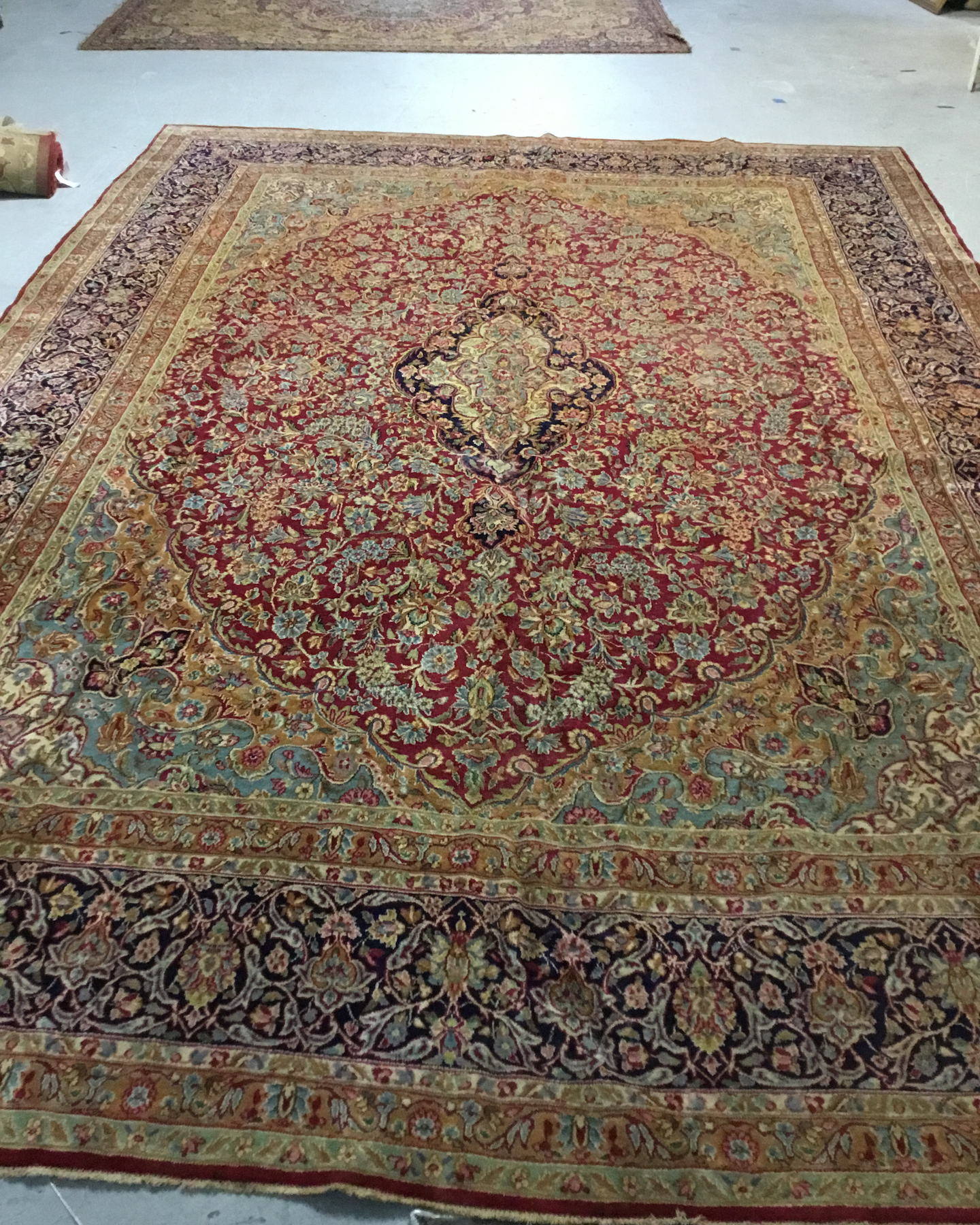
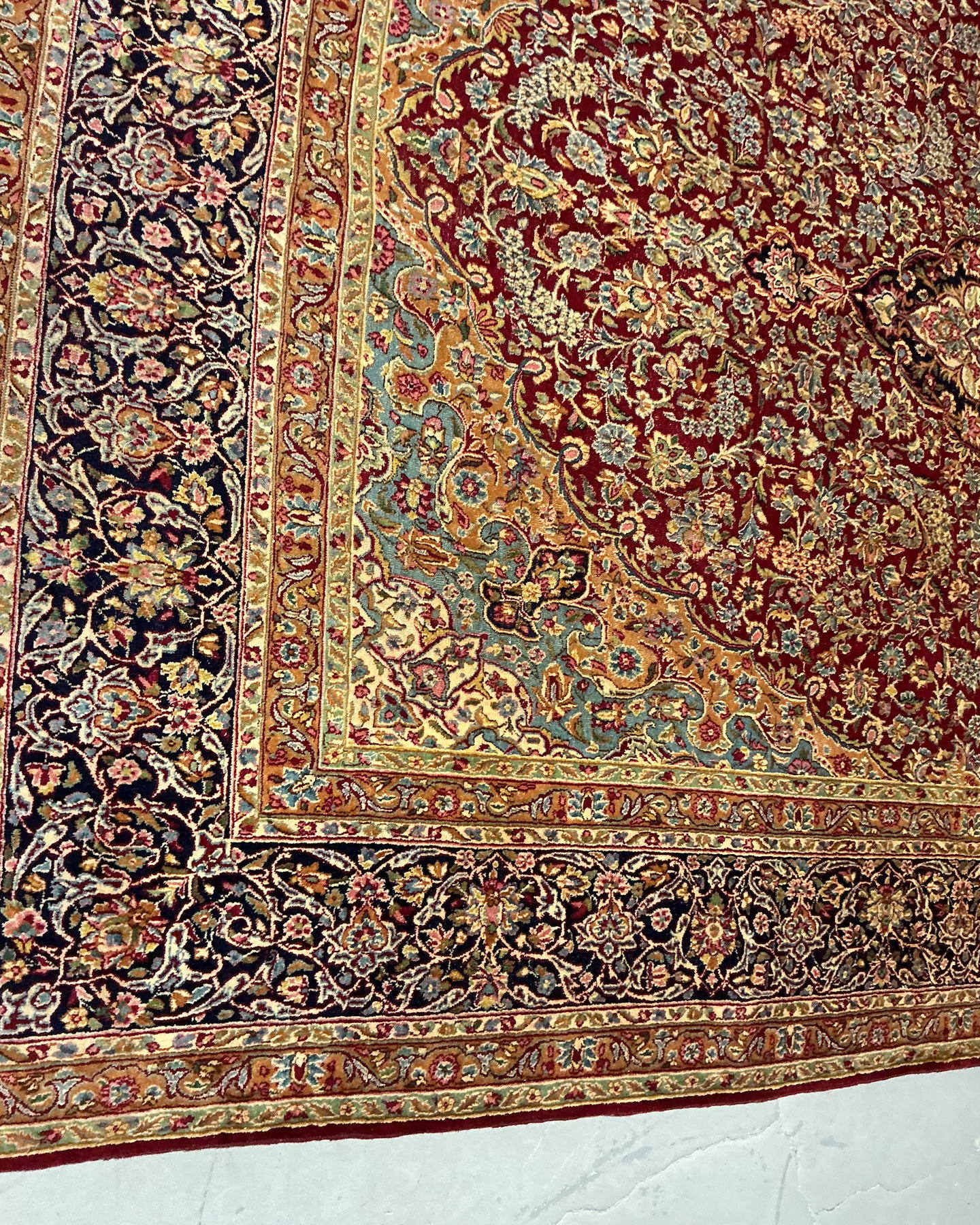
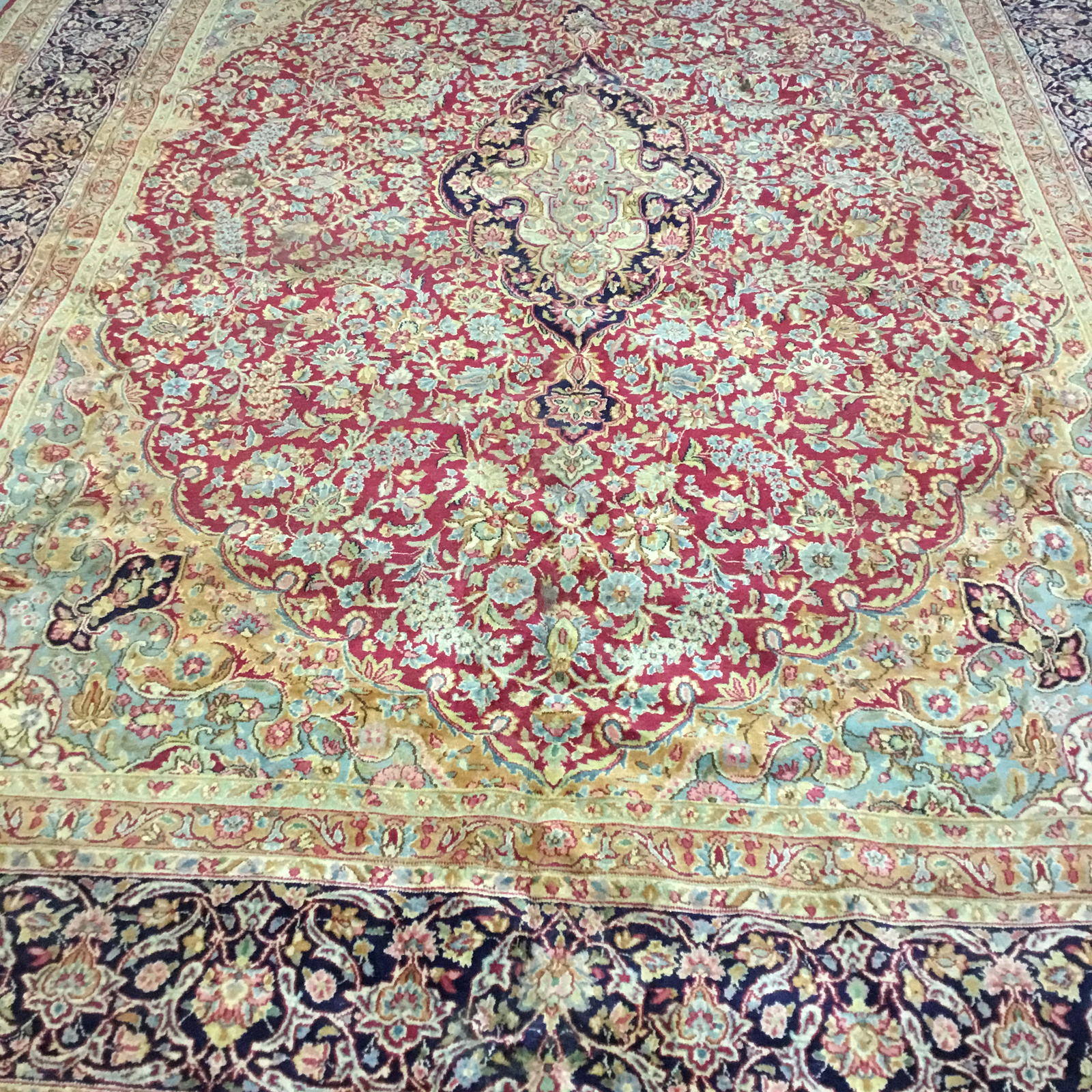
One hand-knotted Persian rug, photographed before and after cleaning.

Before
Hand-knotted Persian rug before cleaning, the deep red field and blue-green floral tracery muted and greyed
After
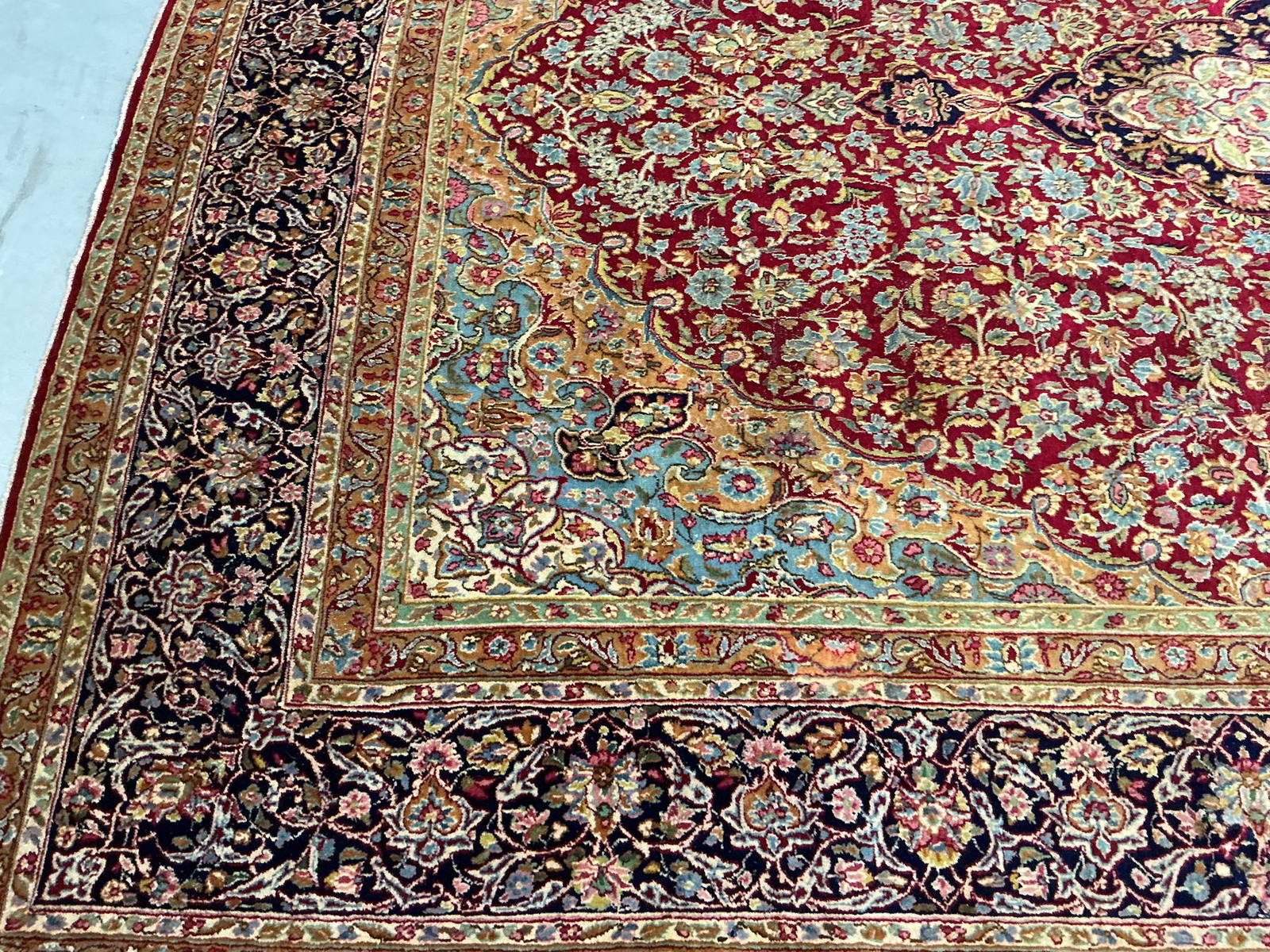
The same rug after cleaning, with the red field, gold corner spandrels and blue-green florals showing clearly
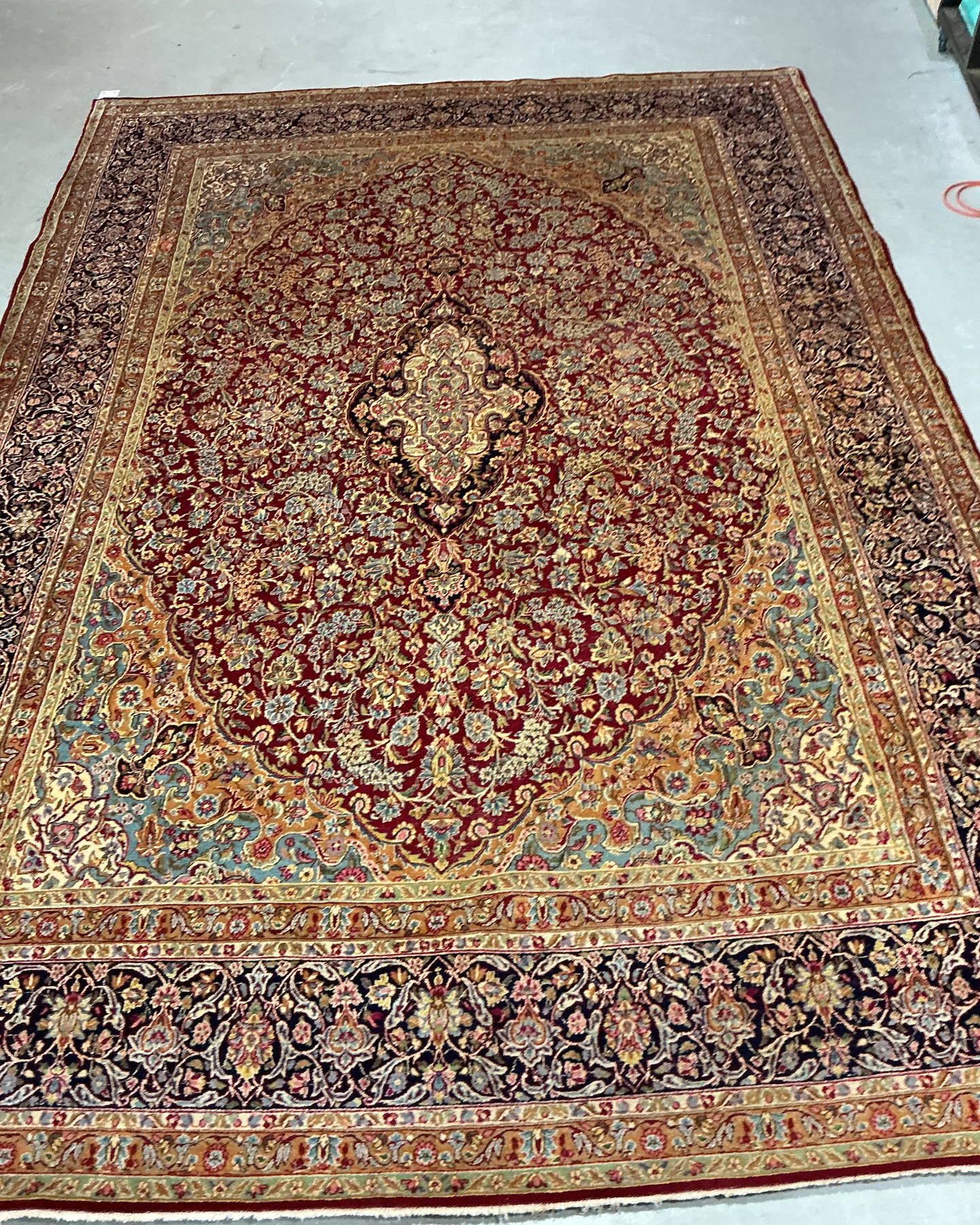
A hand-knotted Persian, before and after cleaning.
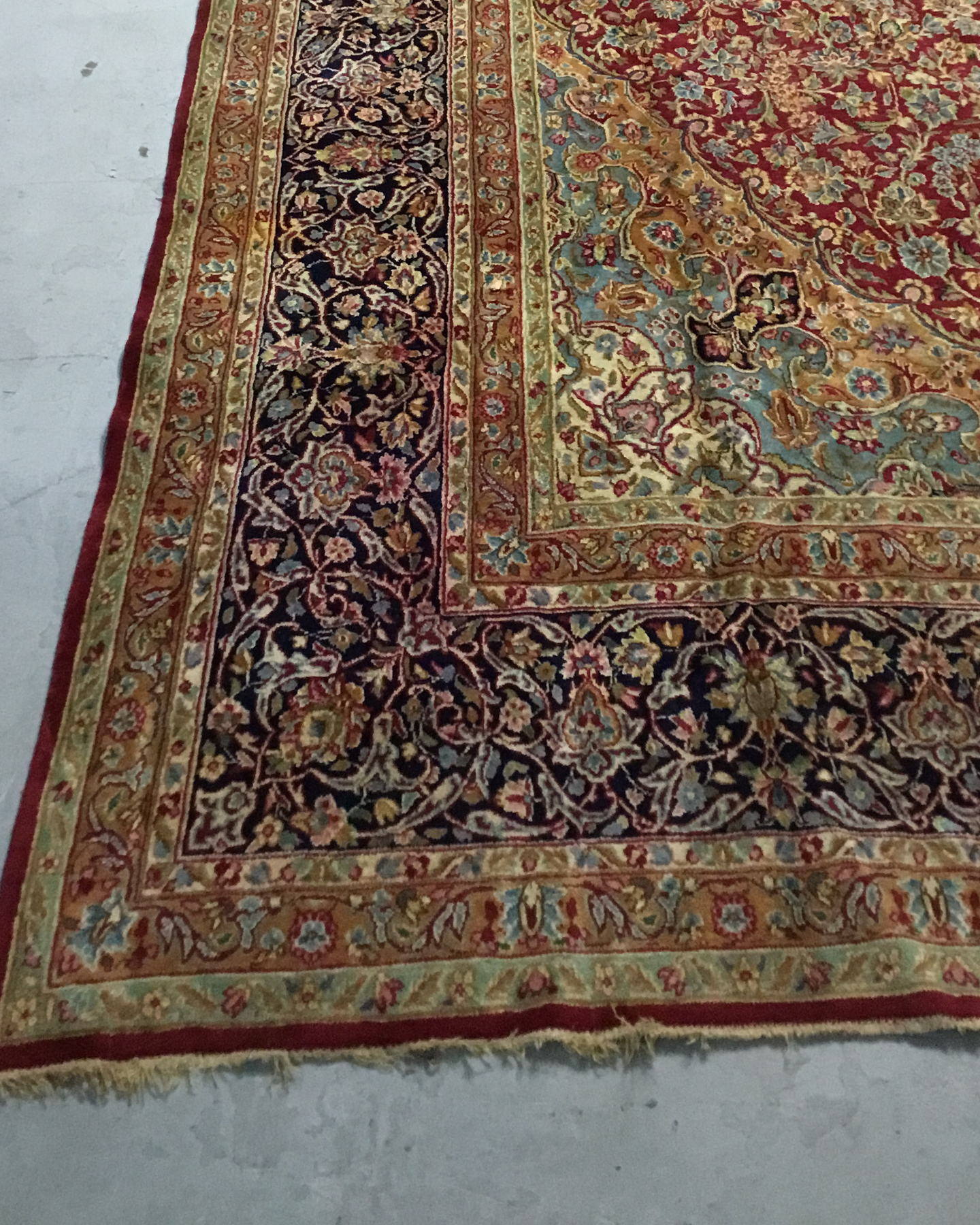
Before
Corner of the same rug before cleaning, the navy border and ivory fringe dulled and flattened in tone
After
The same corner after cleaning, with the navy border, gold guard bands and ivory fringe distinct again
Corner detail — border, guard stripes and fringe.
Before
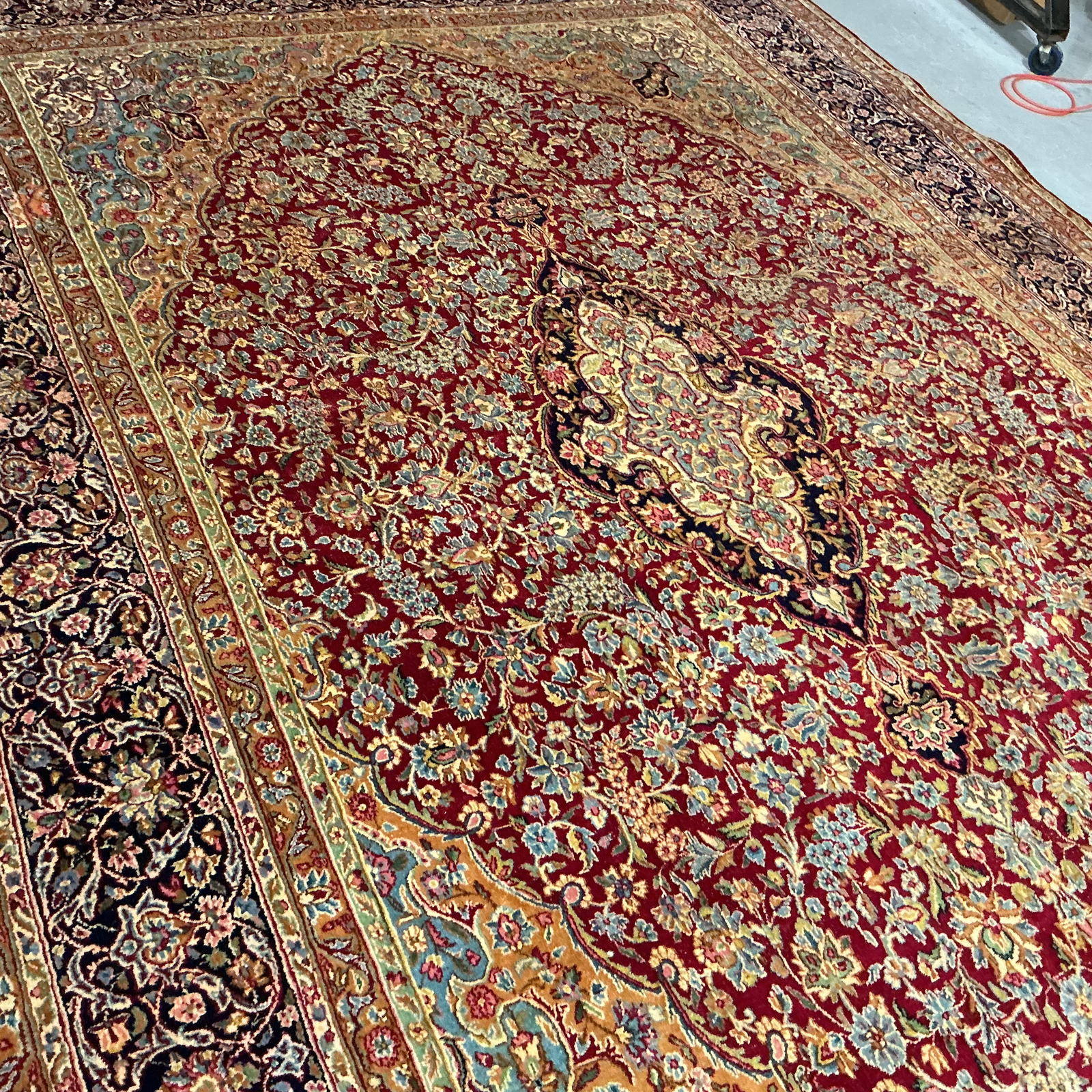
Centre of the same rug before cleaning, the navy medallion and red field hazy and low in contrast
After
The same medallion after cleaning, the cream and gold palmette reading crisply against the navy and red
The central medallion and the field around it.
Before
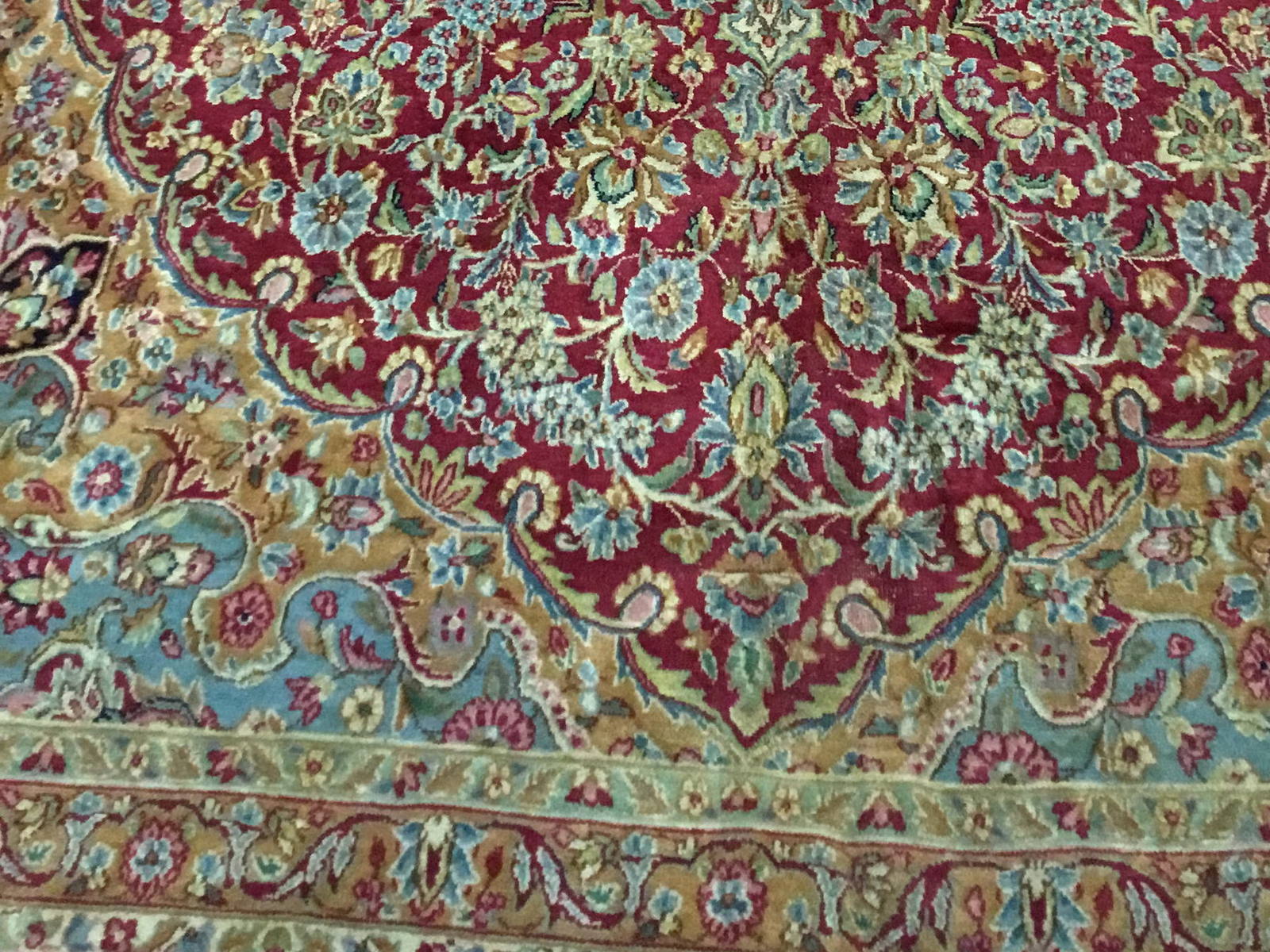
Field meeting border on the same rug before cleaning, the blues and pinks greyed and indistinct
After
The same section after cleaning, with the pale blue scrollwork and pink florals separated and legible
Where the field meets the border.
Local Conditions

Drying a Rug in Nashville Air

Nashville gives a rug 148 damp days and 52 freezing nights a year, which is two completely different drying environments in the same house. Knowing which half of the year a rug has been sitting through changes what we expect to find in it before it is even unrolled.

71.7%
Mean relative humidity, five-year average
101
Days a year at or above 80% relative humidity
23
Longest unbroken damp run, in days
141
Days a year with measurable rain

Rain, and the trip to the workshop

141 days a year here see measurable rain, totalling 68.2 inches, so a rug leaving the house is wrapped for the weather rather than for the look of it.

It is also why we would rather collect a wet rug than have it wait: a rug that is already damp when it is rolled is in the worst possible condition for sitting still.

Why it cannot dry where it lies

A rug washed in the room it lives in has to give its water back to that room's air, and for 23 days at a stretch Nashville air is already at or above 75%.

Air that damp takes water out of a rug slowly at best, which is the whole problem with in-home wand cleaning here: the pile dries, the foundation does not, and the rug smells fine for a few weeks and then does not.

The pile is not the part that matters

Wool will carry close to a third of its own weight in water without feeling wet, and on the 101 days a year that reach 80% relative humidity it is doing exactly that.

So a rug that feels dry to the hand can have a loaded foundation, which is why drying is taken to moisture readings rather than to touch, and why the back of a rug tells you more than the front.

The floor the rug goes back onto

Where the housing runs to crawlspaces — Green Hills, Brentwood and 12 South among them — a rug that has been rewetted from below will smell again within a week of coming home if the crawlspace is not addressed too.

That is not a cleaning failure. The wash removes what is in the rug; it cannot remove what is under the floor, and we would rather say so before collection than after delivery.

Rugs collected from the finished lower levels common in Forest Hills, Brentwood and Bellevue are the ones most often mistaken for permanently ruined.

A below-grade floor keeps feeding moisture back into anything laid on it, so the question to settle before the rug goes home is whether the floor has been dealt with — not how thoroughly the rug was washed.

Housing on this route starts in the 1880s, so a fair number of these rugs are drying onto floors that are older than any vapor barrier — a detail worth settling before the rug comes back.

Humidity, rainfall and temperature figures are from the ERA5 reanalysis record for the five years from 2021 through 2025, measured at the center of the Nashville service area.

What We Accept

What We Take, and How It Is Handled

Everything that goes on a floor has a correct method. The construction chooses it, not the calendar.

Constructions, and the treatment each of them will tolerate.
Rug type How we handle it
Hand-knotted Persian & oriental Immersed, once every color has been swabbed and cleared. Ends worked by hand. Older pieces get gentler agitation and longer on the drying floor.
Wool area rugs Immersion at neutral pH with the lanolin left in place. Strip that out and you have removed the very thing that makes wool shed dirt.
Silk & art silk (viscose) Specialist low-moisture work. Viscose goes yellow and stiff as soon as it is over-wetted, so it is kept out of the bath entirely.
Cotton flatweaves & dhurries Tight moisture control and drying under tension, so a weave designed to be used from either side does not pull in or ruck up.
Jute, sisal & seagrass Dry methods, or as close to dry as we can get. Plant fibers mark themselves with their own water and are the first thing in a Tennessee basement to turn.
Hand-tufted rugs Washed around the adhesive layer instead of through it. That layer is what perishes with age, and it is where the old-glue smell originates.
Machine-made synthetics Polypropylene, nylon and polyester stand up to a hard wash and a strong pre-treatment, and they show the difference more plainly than anything else here.
Shag, hides & sheepskin Handled separately, with agents matched to the fiber and hand finishing afterwards to lift the pile back up.
Local Specialties

Three Things Nashville Puts Into a Rug

Rain, and Where It Ends Up

The figure that shapes rug work here is sixty-eight inches of rain across a hundred and forty-one days, which is more water than any other market on this map has to place somewhere. Two routes bring it to a rug. A vented crawlspace draws in summer air and leaves the moisture on the underside of your floorboards. A basement floor stays cooler than the room through the warm months, so moisture collects there and the rug wicks it up. Either way the pile feels dry while the cotton beneath it is loaded, and the smell in a closed room is a colony living in that foundation. It leaves in the wash and is followed with a treatment. A spray over the top survives one humid week.

Limestone Grit and Building Dust

The Nashville Basin is thin soil over limestone, so what arrives on shoes is a pale, hard, very fine grit with a clay fraction attached. It has no interest in staying on the surface: it travels to the bottom of the pile and settles against the knots, where every footfall works it further into the fiber. In this city a second helping usually follows — sanding dust and drywall fines from whichever room is currently being pulled apart, just as hard and considerably more alkaline. Both have to be shaken and air-dusted out while dry. Wet grit simply packs down tighter.

Pet Accidents

The salts stay in the foundation and draw moisture back out of the air whenever the humidity rises, which across a hundred and forty-eight damp days a year is a good deal of the time. On an old board floor they do not stop at the rug either — they soak into the wood underneath, which is why the smell sometimes outlasts the rug that caused it. Left long enough they burn the dye out from below. The contamination is flushed entirely, and discoloration corrected wherever surviving dye allows.

How This Works in Practice

Washed Away From Home

Collected, washed elsewhere, then dried flat under moving air — not hung heavy and dripping, and never dried on the floor it came off.

Method Follows the Fiber

Fiber identified and dyes swabbed before any water. Neutral chemistry over wool and silk, and something stronger only where the rug can carry it.

Collection & Delivery

Davidson and Williamson counties, out and back, at no charge. Whatever is standing on the rug gets lifted as part of it.

Nothing Held Back

What turned up at intake, what the work comes to, and which marks are permanent — all of it before the wash rather than after delivery.

Questions

Before You Book

How long will it be gone?
The timeline arrives with the quote, so the decision is yours to make with it in hand. Drying is the unhurried part and a wet August stretches it, because the rug leaves when a meter reads dry rather than when the diary needs the space. Heavy pet contamination, a dye that has run, or repair work will all add days, and you hear about it at the start.
Can you come while the house is empty?
Routinely. Plenty of these rugs are collected through a neighbour, a house-sitter or a property manager holding a key, and returned before the owner is back. Put whoever has access in the form and we will work around them. The rug is photographed at collection either way, so there is a record of its condition before it left the room.
Is there anything you turn away?
Not much. Hand-knotted Persian and oriental rugs, wool, silk, cotton flatweaves, jute and sisal, hand-tufted pieces, machine-made synthetics, hides and shag all come through. What differs is the method, and old silk and viscose never go near a bath.
Is the collection really free?
Yes, right across Davidson and Williamson counties. We come out, move what is standing on the rug, take it away, and bring it back rolled and ready to put straight down. Neither journey shows up on the invoice.
Any risk of shrinkage, or colors running?
Not where the method has been matched to the rug in front of us. Every color is swabbed before water reaches the pile, and a dye that moves changes the plan — either low moisture or a wash with a setting stage in it. Shrinkage happens when a cotton foundation is soaked and then dried under tension, and controlled flat drying exists to stop exactly that.
How often should a Nashville rug be washed?
A year to eighteen months for a rug in a room the household actually lives in. That is tighter than the national advice, and the local case for it is specific: sixty-eight inches of rain a year spread across a hundred and forty-one days, crawlspaces and basements passing moisture up into the floor, and pale limestone grit arriving on shoes in every season. A rug in a spare room will go two or three years quite happily. A rug that has been wet is not on any schedule and should be dealt with at once.
Will the musty smell go?
In most cases, yes. The source is in the foundation rather than on the surface, so it has to be flushed out under immersion and then treated. Sprays mask it until the next wet week. Where the cotton itself has started to break down you are looking at a repair as much as a wash, and we would rather name that than sell you a second one. It is also worth checking what the floor under the rug has been doing while the rug was blamed.
How do you price it?
By the square foot, then adjusted for fiber, construction and condition — a machine-made synthetic and a hand-knotted silk are not the same piece of work by any measure. The figure reaches you before work begins, the estimate is free, and the total does not move while the rug is away. Send us the details and we will come back to you.
Get In Touch

Get It Collected

Tell us roughly what you have and which side of town it is on, and we will fit it into a run.

  • Service area
    Davidson and Williamson counties, Tennessee
    Collection & delivery included throughout
  • Hours
    Mon–Sat: 9:00 AM – 5:00 PM
    Sunday: Closed

Free Cleaning Estimate

Up to 6 photos. Close-ups of any damage, stains or wear help us quote accurately without a visit.

Shall We Take It Off Your Floor?

Estimate free, both journeys included, and a rug that comes back looking like the one you chose.

Rug Repair & Reweaving

Ends, sides, moth grazing and rewoven losses — what can be saved, and what saving it takes.

Repair services

Flood & Storm Recovery

The first two days after a rug takes creek water, storm water or a leak, and what to do with them.

Water damage

The Rug Owner’s Guide

Knots, fibers and construction, and what looking after all of it means in an old Middle Tennessee house.

Read the guide
Start a Free Estimate Service Areas